

When you search for the best CBD cream for pain, it helps to separate the question you typed from the facts a product label can establish. A label can describe ingredients, format, stated amount, and batch documentation; those details do not by themselves show that a cream relieves pain. Use this checklist to compare products carefully and decide what questions to ask before buying.
What can product evidence tell you about CBD cream and pain?
Topical products are easy to compare by packaging, but a clear label is not the same thing as proof of a health outcome. The National Center for Biotechnology Information review, Science of Compounded Topical Pain Creams, notes limited clinical evidence for evaluating topical absorption or potential transdermal penetration of ingredients commonly used in compounded creams. It addresses compounded pain creams broadly, not a verdict on every CBD product. It is useful context for being cautious about claims, not a product-by-product assessment.
Keep three questions distinct:
- What is in the container? Read the product-specific ingredient list and stated CBD format.
- How much is listed? Note whether the amount is per container, serving, or another unit. Do not assume amounts are directly comparable until units and package sizes match.
- What outcome is established? A listed amount, customer review, or batch report is not proof that the product will relieve pain.
Claims about pain can depend on formulation, use, and evidence for that exact product and purpose. Avoid treating a marketing phrase or general study as a guarantee. If you have questions about pain or whether a topical is appropriate for you, ask a qualified healthcare professional.
How can you compare CBD cream labels side by side?
Start with the package and product page for the specific item you are considering. Record the same details for each option rather than relying on memory. This worksheet does not rank products or suggest that any one format works better.
| Detail | What to record | Why it matters |
|---|---|---|
| CBD format | Exact wording, such as isolate, broad-spectrum, or full-spectrum, if stated | These terms describe formulations; do not infer a format from a brand or product name. |
| Stated amount | CBD amount and unit or package basis shown | Amounts are comparable only when measurement basis and package size are understood. |
| Other ingredients | Full list, including fragrance and other topical ingredients | Ingredients help you assess preferences and possible sensitivities. |
| Product form | Cream, lotion, balm, salve, or roll-on | Texture and packaging affect fit with your preferences and routine. |
| Batch documentation | Whether the maker provides a product- or lot-specific report, and what it measures | A report applies to its identified batch and listed tests, not every item or a health outcome. |
| Directions and warnings | Instructions, cautions, storage, and contact details | Follow product-specific directions and check whether they address your circumstances. |
Compare like with like. A small roll-on and a large jar may list different total amounts because package sizes differ. A strength statement per ounce cannot be compared directly with a total amount per container without converting the units—and even then, the comparison says nothing by itself about likely results.
A worked label comparison
Imagine one package states an amount per ounce while another gives a total amount for the whole jar. First write down the package size for each. Convert the first amount to a package total only if the label gives enough information to do so; keep the original unit beside your calculation. Next note whether each figure refers to CBD specifically and whether the product pages describe the same format. If any label leaves a unit or quantity unclear, mark it “verify” rather than filling the gap with an assumption.
Now compare the non-quantity details separately: ingredient panels, product form, directions, warnings, and batch documentation. You may discover that one product better suits your texture preferences or has clearer information. That is a useful shopping distinction, but it is not a conclusion about pain outcomes. Keep a blank or “not established” field for expected results so a higher number does not silently become a promise.
What do CBD format and strength statements mean?
CBD topical pages may use terms such as isolate, broad-spectrum, or full-spectrum. These are formulation descriptions, not measures of quality or effectiveness. Check that the term appears on the specific product page and label. Do not carry a statement from one item across a brand’s entire range.
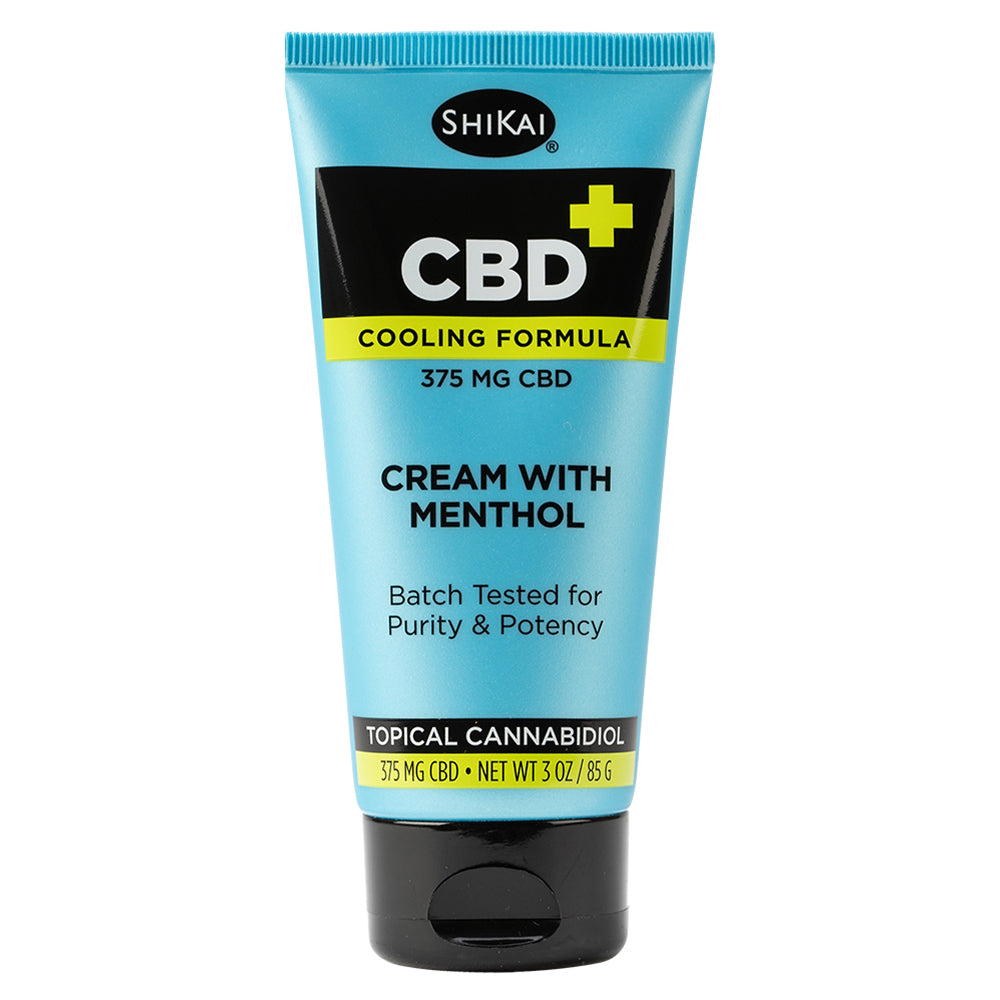
ShiKai’s CBD Topicals page describes its topical products as CBD isolate, states no THC, lists 125 mg of CBD isolate per ounce, and refers to batch testing. Those details belong to the page and products it covers. Confirm the current product label and page for the item you are considering, since formulations and listings can change.
Look for the unit attached to every quantity. “Per ounce” is a concentration-style statement; a total milligram amount on a jar may be a package total. Neither figure tells you how much is absorbed through skin or predicts a personal outcome. Avoid comparing a product using one measurement basis with another using a different basis as if they were equivalent.
How to make a useful comparison worksheet
Use one row per product and avoid combining details from a collection page, an old screenshot, and a different item’s package. Record the date you checked the information. Add the exact product name and size, the amount and unit, the format wording, the complete ingredient list or a note to consult it, directions and warnings, and the available batch-report route.
Separate observations from conclusions. “125 mg per ounce, stated on the topical information page” is an observation. “This amount is stronger” may be an unsupported conclusion unless the other amount uses the same basis, and “this will work better” goes beyond label comparison. A clear worksheet helps you see which facts are confirmed, which are not comparable, and which questions need an answer from the manufacturer or a healthcare professional.
Related products


How should you read batch information?
Batch information can add detail about an identified production lot. First, match the report to the exact product and lot or batch identifier, where available. Then read what the report says it tested. A document reporting composition or contaminants answers only the questions covered by those tests; it does not establish clinical performance, guarantee a result, or prove that every batch has identical findings.
Use this review:
- Find the lot or batch identifier on the package or product information.
- Open the maker’s batch-documentation route and check that the report corresponds to that identifier.
- Review the report date, sample identification, and named tests. If unclear, ask the manufacturer.
- Keep the conclusion narrow: findings apply to the identified sample and stated tests.
ShiKai provides a Batch Information page. Check it for relevant product-specific documentation, and contact the company if you cannot match a report to the item in hand. A batch report should not be read as proof that a topical will ease pain.
What a report can and cannot answer
A report is most useful when its product and batch identity are clear and the test names are understandable. Read the document for its scope: which sample was tested, when it was tested, and which measurements appear. Do not assume that a report covers every ingredient or every possible contaminant unless it says so. Likewise, a result for one batch is not automatic evidence about another production lot.
If the report uses abbreviations or unfamiliar methods, ask the maker what the named test means and which product lot it covers. Keep a note of the answer and the date. If the information is not available or does not match your package, say so plainly in your comparison. Missing documentation is a reason to ask a question; it is not proof of a particular safety or performance result.
Which precautions deserve attention before choosing?
Read the full directions and warnings on the exact product. Check the ingredient list for components you prefer to avoid or have reacted to before. Fragrance, botanical extracts, and other ingredients may matter to individual preferences, even when the product’s main focus is CBD.
Do not assume products are interchangeable because they share a CBD amount or format. A cream, balm, salve, and roll-on can differ in other ingredients, packaging, and directions. Follow the label rather than applying a product in a way that is not described. If the label is incomplete or you have a concern about interactions, use on a particular area, or whether it fits your situation, ask a qualified healthcare professional or the manufacturer before use.
Keep topical products stored as directed and out of reach of children and pets. Do not use a product if its packaging or label is damaged or if you cannot identify what it contains. If you experience an unexpected reaction, stop using it and seek appropriate medical advice. These are general precautions, not a substitute for product-specific directions or professional guidance.
A pre-purchase checklist for personal circumstances
Before deciding, pause over practical questions rather than trying to infer suitability from the product name. Can you read the complete ingredient list? Are the directions and warnings available for the exact format? Is there an ingredient you know you prefer to avoid? Does the package specify how and where to apply it, and does that match what you intend to do? If an answer is unclear, resolve it before purchase instead of improvising.
For anyone taking medication, managing a health concern, pregnant or nursing, or uncertain about topical use, a qualified healthcare professional is the appropriate person to discuss personal circumstances with. The product maker can answer questions about its label, ingredients, package, and documentation, but cannot replace individualized medical guidance. Keep these roles separate: the manufacturer clarifies product facts; a clinician advises on your personal health context.
After purchase, follow the package directions and avoid adding steps the label does not describe. Store the container as directed and keep it identifiable. If the package changes, check the current wording again rather than relying on a saved note from a previous version. This simple habit is useful for any topical product and avoids treating an older listing as the current instructions.
How do ShiKai’s topical options fit a label-first comparison?
ShiKai’s catalog includes topical formats, but the useful comparison is specific to the item, not the broad category. Start at the ShiKai CBD topicals collection to review listed options. For each candidate, open its product page and check the current package size, stated amount, ingredient list, and directions.
For example, a salve listing should be read as a salve listing, not as evidence for every cream or lotion. Compare its exact label details with another item only after confirming both the formulation and measurement basis. Do not infer an item is intended for pain relief simply because a search query uses that wording.
Use the CBD salve product page only for the information displayed about that item, and check the CBD salve batch listing if you are reviewing its batch route. These links illustrate why the item and its documentation need to match; they do not establish a medical result or a claim about every topical.
If you are comparing product categories more broadly, ShiKai’s Therapeutic Care information and product overview provide other ways to navigate. Treat each category and product as its own listing. For general company background, see About ShiKai.
How can you make a careful comparison in practice?
Make the comparison in stages so a single attractive detail does not dominate your decision. First gather the exact product names and package sizes. Second copy the amount and its unit as printed, without converting anything yet. Third list the format wording and ingredients. Fourth record directions, warnings, and whether batch documentation can be matched to the package. Only after gathering those observations should you compare the options.
For instance, suppose one listing gives a total amount for a jar and another gives a per-ounce figure. Your first note should preserve both statements exactly. If the size and units allow conversion, show the arithmetic in a separate column and label it as your calculation. If the package size is missing, the units differ, or the wording does not clearly say whether it refers to CBD, do not calculate. Add a question mark and request clarification instead. A precise-looking number based on an uncertain input is still uncertain.
Next examine format and ingredients independently from quantity. A jar may be convenient for someone who prefers that packaging, while a roll-on may be easier for someone who wants a different application format. Those are practical preferences, not evidence that one is more effective. Likewise, the presence of a familiar botanical or scent does not tell you how a particular formula will feel on your skin. The exact product panel is the useful source.
Finally, identify what would change your shortlist. You might rule out a product because the ingredients are not fully shown, the directions do not fit your intended use, or the documentation cannot be linked to the item. You might favor another because the package size or texture seems more convenient. Write the reason as a preference or a verified fact. Do not convert it into a claim about expected pain relief.
What common comparison mistakes can you avoid?
- Equating strength with results. A higher listed amount does not establish that a product is more effective or suitable.
- Mixing product-level and brand-level statements. A claim on one page does not automatically apply to every product.
- Reading batch testing as an outcome study. A test report describes its sample and methods, not a clinical result.
- Comparing totals without checking units. Confirm package size and whether the amount is per ounce or for the whole container.
- Relying on a broad phrase instead of the ingredient panel. Review the exact list for the product you may buy.
- Assuming all topicals share directions. Follow each product’s own label and warnings.
Consider a shopper who sees “500 mg” on one package and “125 mg per ounce” on another. Those figures cannot be ordered from strongest to weakest until the size and measurement basis are understood. Even after conversion, the numbers describe stated amounts, not how an individual will respond. A disciplined comparison records both the math and its limit.
Another common trap is transferring a familiar ingredient statement from a cream to a balm. The packaging may look related, but ingredient lists and directions can differ. Open the exact product page and confirm its label. If the listing does not answer a material question, mark it unresolved rather than using the details of a neighboring item.
A simple notes sheet makes a fair comparison easier. Use columns for product name, form, package size, CBD amount and unit, other ingredients, batch documentation, directions, warnings, and questions to resolve. Leave an “expected pain result” field blank: a label comparison cannot supply reliable product-specific evidence for that outcome.
How can you narrow your shortlist for your routine?
Once you have gathered product facts, use practical criteria to reduce the list. Start with the format you prefer to handle and store. Then consider whether the package size feels manageable, whether the ingredient list is complete, and whether you can follow the directions as written. These criteria help you choose an item that suits your habits without making a prediction about a health outcome.
One person may prefer a cream texture and a jar, while another may value a compact package that is easy to carry. Someone who dislikes fragrance may need to inspect the complete ingredient list instead of relying on a product title or a broad descriptor. A shopper who wants to check testing should look for the lot identification and report route before purchase, then match the package after it arrives. These are distinct needs; there is no reason to force them into a single ranking.
Try a two-column shortlist: “must confirm” and “preference.” Put exact label facts and unanswered safety or instruction questions in the first column. Put texture, packaging, and ease of use in the second. Do not treat an unresolved item as a negative finding about the product. It simply means you lack that information. Ask a focused question through the contact page if you need help interpreting a listing or finding its documentation.
Set a stopping rule before shopping further. For example, decide that you will not compare amounts unless the product pages state the units and package sizes; you will not buy until you can read directions and ingredients; and you will consult a healthcare professional about personal suitability questions. A clear stopping rule reduces the temptation to fill gaps with assumptions or keep searching for a label that promises certainty.
How can you make a careful final choice?
Choose based on verified product facts and your preferences, not an implied promise. Confirm that the current page matches the item in your cart. Check the amount and its unit, read the full ingredient list, and look at directions and warnings. If batch documentation matters to you, check whether it is tied to the product or lot and what it actually reports.
Before checkout, verify current availability, shipping terms, and any offer on the live store, since those details can change. ShiKai’s shipping policy can help with shipping questions; the contact page provides a route for questions about product details. No comparison checklist can determine whether a topical will relieve pain or replace care from a qualified professional.
One practical way to finish is to write a short decision note: “I chose this format because it suits my preferences; I verified the current amount and unit, reviewed the ingredients and directions, and know what the batch report does and does not cover.” If you cannot complete that sentence without guessing, return to the product page or ask a focused question before ordering. This method keeps the decision grounded in information you can verify.
For a question about the listing, ingredient panel, or batch route, use ShiKai’s contact page. For a health-related question about personal suitability, consult a qualified healthcare professional. Keeping those questions with the right source prevents a product description from being mistaken for individualized advice.
Review the CBD topical options
The most useful choice is one you can explain from the current label: what the product contains, how its amount is stated, what its documentation covers, and which questions remain unanswered.