
When skin feels persistently dry, tight, or easily uncomfortable, choosing a botanical moisturizer can raise more questions than it answers. A product's plant-based positioning is only one part of a useful comparison: shoppers also need to understand the formula, fragrance information, texture, format, and intended use.
Start your comparison with the exact formula and label. Review ShiKai Borage Therapy product details to compare formats and ingredients.
Comparing natural products for eczema should begin with the label and the experience your skin is having, not with a promise that any cosmetic product can treat a condition. Look for clear ingredient details, a format you can use consistently, and fragrance information that helps you make an informed choice. For broader context, see our guide to natural dry-skin care and product decisions.
Eczema is associated with skin-barrier dysfunction and several possible contributing factors, so a product comparison guide should stay focused on practical shopping questions rather than diagnosis. That distinction makes it easier to evaluate what a product is, what its label supports, and which details deserve closer attention.
What This Product-Selection Question Means
When someone searches for natural products for eczema, they may be asking a product-shopping question, a health question, or both. Those questions overlap, but they should not be treated as interchangeable. A shopper can compare ingredients, fragrance information, texture, format, and intended use without assuming that a botanical lotion diagnoses a skin condition or produces a particular medical result.
Eczema, also called atopic dermatitis, is associated with skin-barrier dysfunction and several possible contributing factors, including genetics, immune-system differences, and environmental triggers. The academic review of atopic dermatitis published in PubMed Central describes that broader context. It is useful background, but it does not turn a consumer product comparison into a diagnosis.
The American Academy of Dermatology explains that eczema can create tiny cracks in the skin, which may allow water to escape quickly. That helps explain why people may look for products that feel comfortable on dry-feeling skin or fit into a moisturizing routine. It does not show that every product labeled natural, botanical, or plant-based is suitable for every person, nor does it establish that a specific formula treats eczema. See the AAD's guidance on moisturizer and eczema for the medical context.
That boundary shapes the rest of this guide. We compare what a product is, what its current label says, how it feels to use, and how clearly its intended use is communicated. We do not diagnose a rash, predict an outcome, or present product-page information as independent clinical evidence. If symptoms are persistent, severe, worsening, or unclear, product research is not a substitute for advice from a qualified health professional.
How to Compare Natural Products for Eczema Without Medical Claims
A useful comparison starts with the product, not a promise. When reviewing natural products for eczema, treat the phrase as a shopping search rather than proof that a formula can address a medical condition. Compare what is actually disclosed, how the product is presented, and whether the format fits your personal preferences for dry-feeling or sensitive-feeling skin.
1. Read the ingredient list closely
Look for the complete current ingredient list, not only the botanical highlighted in the product name or marketing copy. Note the order and type of ingredients, and check whether the page explains unfamiliar terms. ShiKai provides an ingredient glossary for shoppers comparing formulas, which can help you understand product language without turning an ingredient's presence into a treatment claim.
A botanical ingredient may be meaningful to your preferences, but its inclusion does not independently establish that the product treats eczema or is suitable for every person. If you have known sensitivities or medical concerns, compare the exact label and ask a qualified health professional how to interpret it.
2. Check fragrance and label language
Fragrance positioning deserves its own check. The American Academy of Dermatology recommends a gentle, fragrance-free moisturizer after bathing for people managing dry, itchy skin. That guidance is general medical information, not an endorsement of a particular brand or proof of clinical results. Compare whether a product is described as fragrance-free, scented, or simply silent on fragrance, and do not assume that a botanical description means fragrance-free.
Also review intended use, directions, size, and any available return information. Clear details make it easier to compare formulas on their actual attributes. A product page is first-party information from the company; it is not the same as independent clinical evidence.
3. Consider texture, format, and evidence boundaries
Texture can determine whether a lotion, cream, or another format fits your routine. Consider how quickly you prefer a product to absorb, where you plan to apply it, and whether the packaging makes the label easy to review. These are practical selection criteria, not medical recommendations.
Finally, separate three kinds of information: the ingredient facts on the label, the company's own product descriptions, and independent evidence about a health condition. Keeping those categories distinct helps you make a more informed personal-care choice without assuming a product can diagnose, prevent, cure, or treat eczema.
Related products


It is the richest naturally occurring source for this fatty acid.
View product
Formulated and made in our California 0% carbon emission MHE warehouse with domestic and imported materials.
View productWhich Ingredients and Label Details Should You Compare?
A botanical ingredient can be a useful starting point, but its presence alone does not show that a product treats eczema or will suit every person. Compare the exact current label, the product's intended use, and how the formula fits your own preferences. ShiKai's ShiKai ingredient glossary can help explain ingredient names, while the product page remains the first-party source for the formula and directions.
| Comparison point | What to inspect | Useful shopper question |
|---|---|---|
| Ingredients | Read the complete ingredient list and identify the botanical ingredients, emollients, and other formula components. | Do I recognize the ingredients I want to compare, and can I find an explanation for unfamiliar names? |
| Fragrance | Check whether fragrance is listed or whether the product is described as fragrance-free. Do not assume that botanical means fragrance-free. | Is the fragrance information clear enough for my personal preferences? |
| Texture and format | Note whether the product is a lotion, cream, balm, oil, or another format, along with the finish and application feel described on the page. | Will this texture work with how and when I normally apply skin care? |
| Label directions | Review the stated use, application instructions, warnings, and any storage guidance on the current package or product page. | Are the directions specific and practical for my intended use? |
| Source of information | Separate the product label and first-party product page from independent medical or clinical information. | Is this statement describing the formula, or making a health claim that needs professional guidance? |
Keep product distinctions intact when comparing formulas. If a label leaves an important question unanswered, contact the company or ask a qualified health professional rather than filling the gap with an assumption.
Texture and Routine Considerations for Dry-Feeling Skin
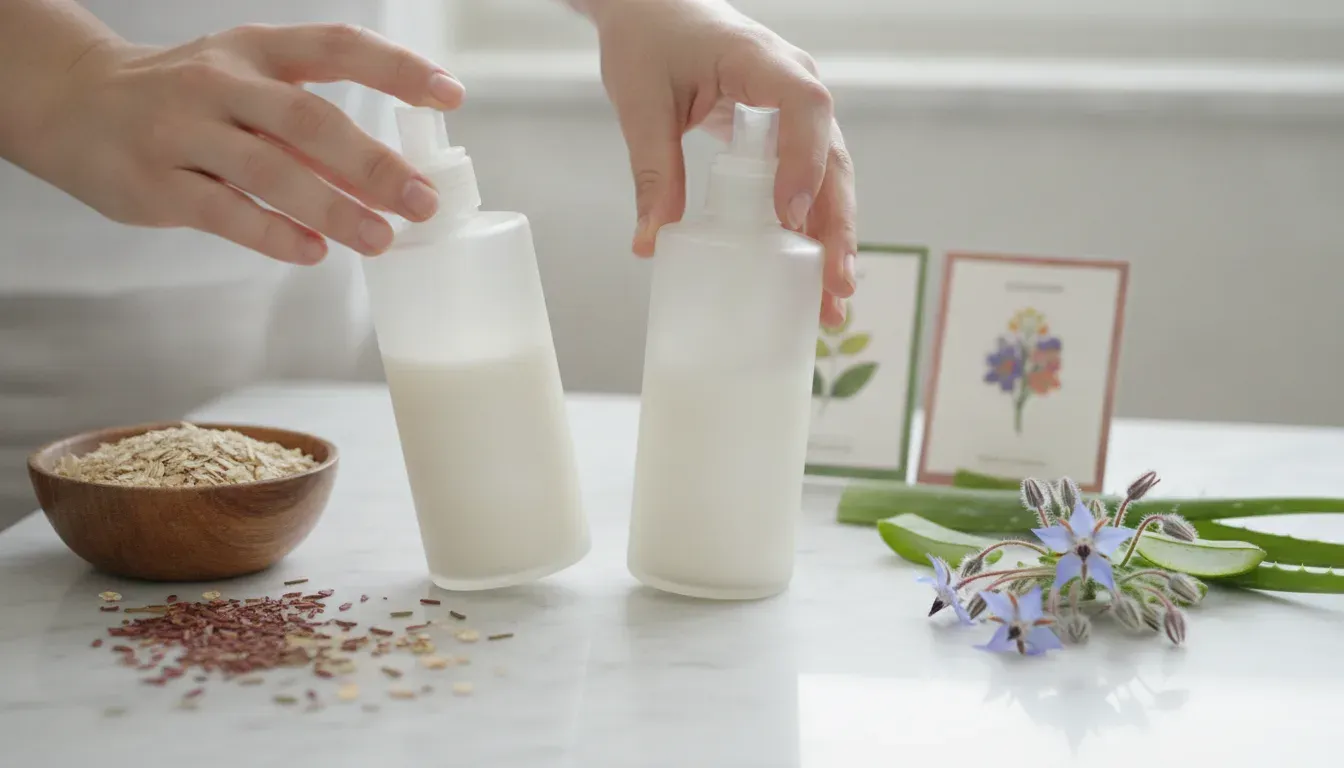
Texture can shape whether a moisturizer fits comfortably into your day. A lighter lotion may feel easier to apply over a larger area or beneath clothing, while a richer format may suit shoppers who prefer a more substantial layer. A spray can offer a different application experience, but it still deserves the same close look at its ingredient list, fragrance, directions, and intended use. These are comfort and routine considerations, not evidence that one format is right for every person.
Match the format to when and how you apply it
Think about the moments when dry-feeling skin is most noticeable. After bathing, some shoppers prefer a product that spreads quickly over slightly damp skin. The American Academy of Dermatology recommends a gentle, fragrance-free moisturizer after bathing and as often as a dermatologist advises. You can use that guidance as a comparison point while reviewing current product directions. Do not assume that every lotion or spray should be used in the same way. See the American Academy of Dermatology's moisturizer guidance for the source context.
Bathing habits may also affect how a routine feels. WebMD advises lukewarm rather than hot showers or baths and gives a 10-to-15-minute duration for general dry-skin care. Treat that as general self-care information, not a treatment plan. If bathing leaves skin feeling tight, compare products based on how easily they apply afterward and whether their current label directions fit your routine. Fragrance preference matters too: fragrance-free guidance is a useful comparison criterion, while a shopper's personal tolerance and preferences may differ.
Read the current label before choosing
Directions can change, and format alone does not explain how a product is intended to be used. Check the current package or product page for application instructions, fragrance information, ingredient details, and any cautions. Regular moisturizing may be part of broader self-care, but Mayo Clinic notes that clinicians can recommend additional care when self-care habits are not enough. That boundary helps keep a comparison of natural products for eczema focused on texture, routine, and informed shopping rather than treatment claims.
How to Review Exact ShiKai Product Details
A useful product review starts with the exact formula and the exact label, not a broad category such as natural products for eczema. ShiKai describes itself as a family-run botanical personal-care company. According to the company, chemists Dr. Dennis Sepp and Dr. Vasant Telang began exploring botanical hair and skin ingredients in 1970, and ShiKai formulates and manufactures products in Sonoma County. You can read that first-party background on the ShiKai About page, but company history is not independent evidence of medical outcomes.
For a shopper comparing products for dry or sensitive-feeling skin, start with the Borage Therapy skin-care collection. The collection distinguishes Borage Therapy Original Formula from Advanced Formula. These names identify separate formulas, so do not assume that one product's ingredient list, texture, directions, or intended use applies to the other.
Compare Original and Advanced Formula directly
Open the individual product pages rather than relying on a search snippet or a retailer description. The Borage Therapy Original Formula lotion and Borage Therapy Advanced Formula lotion are separate formulas. Their current product pages show several concrete differences in the listed ingredients and label details.
| Comparison point | Original Formula | Advanced Formula |
|---|---|---|
| Listed formula highlights | The page lists decolorized aloe vera gel, borage seed oil, safflower seed oil, jojoba seed oil, shea butter, sodium ascorbyl phosphate, and L-ergothioneine. | The page lists rooibos extract, borage seed oil, safflower seed oil, jojoba seed oil, oatmeal powder, and shea butter. |
| Shared ingredients shown on both pages | Both pages list water, glycerin, borage seed oil, safflower seed oil, jojoba seed oil, vitamin E acetate, dimethicone, and other supporting formula ingredients. Confirm the complete current label before purchasing. | |
| Label details displayed | The page currently describes the lotion as unscented, non-greasy, non-irritating, gluten-free, and free from animal ingredients and animal testing. | The page currently describes the lotion as fragrance free, non-greasy, non-irritating, soy-free, and free from animal ingredients and animal testing. It also displays a National Eczema Association acceptance statement. |
These are product-page details, not a prediction about results. The Advanced page's acceptance statement does not establish that the formula is right for every person, and the Original page's ingredient differences do not make it a treatment. Use the table as a reason to open each current product page and label, then compare the details that matter to your routine.
Keep DiabetiCare separate
DiabetiCare is a separate ShiKai range, not another name for Borage Therapy Original or Advanced Formula. Review its own product page and label, and do not infer a medical purpose from the range name. Current prices, availability, reviews, and return details can change, so verify those time-sensitive points on the live product page. This method keeps the comparison specific: you are evaluating ingredients, format, and label information for your preferences, not selecting a treatment or making a diagnosis.
When to Ask a Qualified Health Professional
Comparing natural products for eczema can help you understand ingredients, fragrance information, texture, and intended use. It cannot establish a diagnosis or tell you which treatment is appropriate. Eczema is associated with skin-barrier dysfunction and several possible contributing factors, including genetics, immune-system differences, and environmental triggers. Persistent or changing symptoms may have more than one explanation, so a qualified health professional is the right person to evaluate them. Read the academic overview of eczema and skin-barrier function for additional context.
Seek professional guidance when symptoms do not improve, become more uncomfortable, spread, or interfere with sleep and daily activities. You should also ask for help when you are unsure whether what you are seeing is eczema, when skin is cracked or otherwise concerning, or when a child or another household member has persistent symptoms. A health professional can consider the full picture rather than relying on a product label or a shopper's comparison.
Moisturizing and other self-care habits may be part of clinical care, but they are not a substitute for an individualized assessment. The Mayo Clinic notes that a health care provider may suggest medicated creams when moisturizing and self-care are not enough. Review the Mayo Clinic's diagnosis and treatment guidance for that distinction. Research literature also identifies emollients and topical medicines as established components of eczema treatment. That is why treatment decisions belong with a qualified clinician, not a product comparison alone.
For consumer research, keep the boundary simple: review the exact current label, compare products cautiously, and bring medical questions to a professional. The FAQ below addresses common questions about choosing and evaluating natural products for eczema without turning a shopping guide into medical advice.
Ready to compare the exact formulas? Review the ShiKai Borage Therapy product details before choosing a botanical skin-care option. Compare the current ingredients, format, and label information, and speak with a qualified health professional if you need guidance about a skin concern.
Frequently Asked Questions
Can natural products for eczema treat eczema?
Natural or botanical ingredients do not, by themselves, establish that a product treats eczema. Eczema has multiple contributing factors, and product pages are first-party information rather than independent clinical evidence. Use a moisturizer as a personal-care choice, not as a substitute for professional guidance about diagnosis or medicated treatment. If you have ongoing or concerning skin symptoms, ask a qualified health professional.
What should I compare on a skin-care label?
Compare the complete ingredient list, fragrance information, texture or format, intended use, and the exact formula name. Check the current product label and look up unfamiliar ingredients in a reliable glossary. It is also useful to confirm size, price, and return details before buying, since those details can change. A botanical ingredient is a formula detail, not proof of a particular medical outcome.
Does fragrance-free matter for sensitive-feeling skin?
It can be a meaningful comparison point for people whose skin feels sensitive. The American Academy of Dermatology recommends a gentle, fragrance-free moisturizer after bathing for dry, itchy skin, but individual responses can differ. Read the current label rather than relying only on a product name or a general botanical description. A qualified health professional can help with medical concerns or persistent symptoms.
How should I compare ShiKai formulas?
Start by keeping the product names distinct. ShiKai offers Borage Therapy Original and Advanced Formula lotions, while DiabetiCare is a separate range. Compare each current ingredient list, fragrance positioning, texture, format, and intended use, then choose the details that fit your personal preferences. ShiKai product information can help you review formulas, but it does not establish treatment, guaranteed safety, or suitability for everyone.
For a final formula comparison, review the current ShiKai Borage Therapy product details and confirm the exact label before purchasing.